
Consider the Stone-Curlew
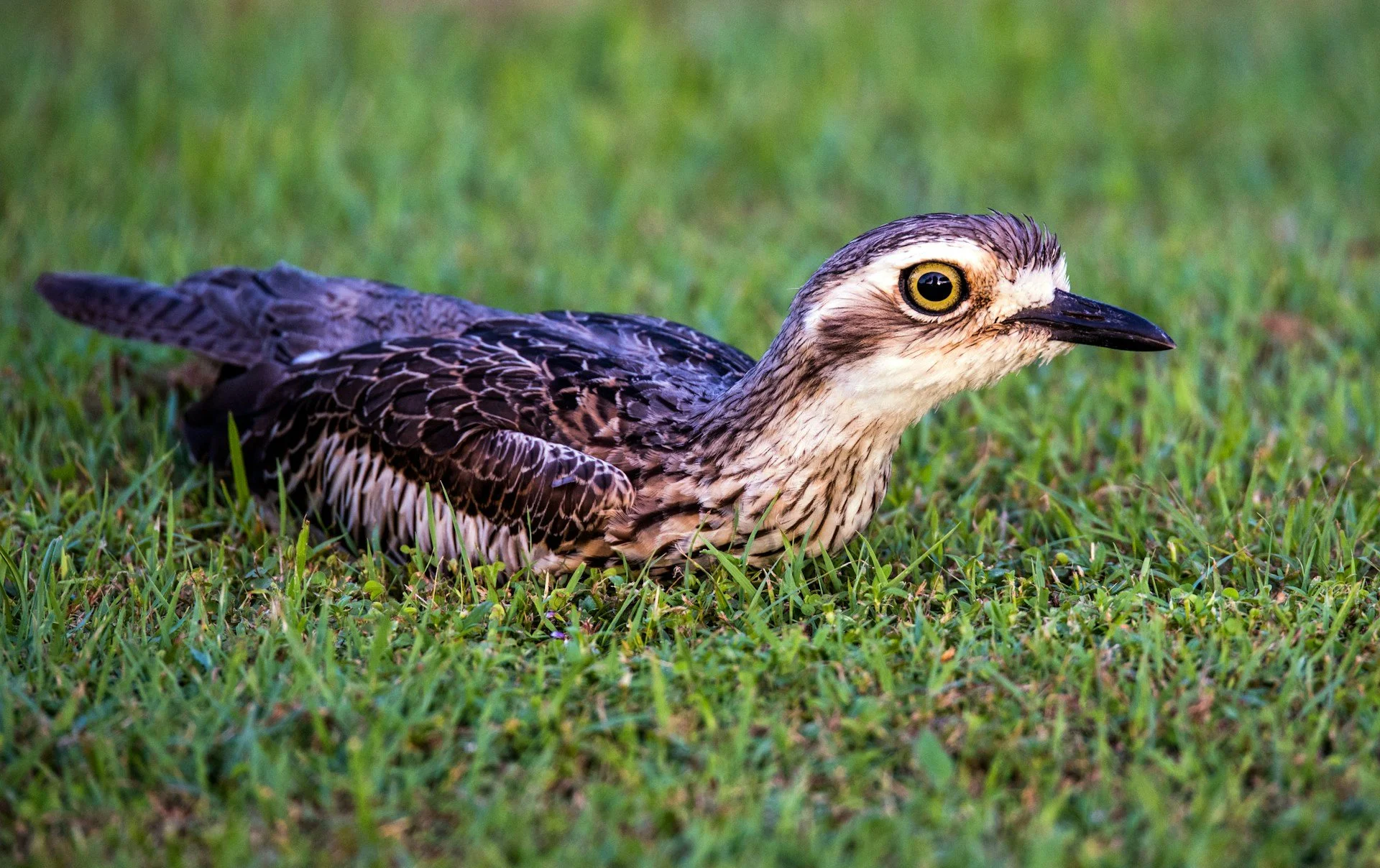
Photo by David Clode on Unsplash
A recent BBC News article suggested that the RAF Barnham asylum plan could be stalled by some small birds…
The UK Government is continuing its plan to reduce the use of asylum hotels by accommodating people seeking asylum at former Ministry of Defence sites. One of these proposed sites is RAF Barnham, in Suffolk, where up to 1,250 people seeking asylum could be housed.
(This proposal forms part of a larger initiative looking at three such sites that could accommodate up to a total of 3,750 people seeking asylum if approved.)
The RAF Barnham proposal has met opposition from West Suffolk Council, which argues that the site lies within the Breckland Special Protection Area and next to a Site of Special Scientific Interest (SSSI). This area is an important habitat for the stone-curlew, a rare and legally protected bird that is highly sensitive to human disturbance.
The report highlighted an unexpected obstacle to the Government's plans to accommodate people seeking asylum at RAF Barnham in Suffolk. The debate has centred on whether the development could disturb one of Britain's most protected bird species. Environmental laws rightly require careful consideration before any decision is made.
The council argues that these strict environmental laws may prevent the site from being used to house people seeking asylum, whilst the Government maintains that expanding alternative accommodation is part of its strategy to reduce reliance on hotels.
As Christians, we are called to celebrate this concern for creation. The Bible teaches that the earth is the Lord's (Psalm 24:1), and humanity has been entrusted with the responsibility of caring for it. Protecting vulnerable species is not at odds with our faith—it reflects the Creator's love for all He has made.
His Eye is on the Sparrow…
This BBC News report reminded us of another Bible verse, where Jesus uses another variety of small bird to teach his disciples a powerful lesson: "Are not two sparrows sold for a penny? Yet not one of them will fall to the ground outside your Father's care. And even the very hairs of your head are all numbered." — Matthew 10:29–30
This report raises another question: if we genuinely care about the habitat of a rare bird, do we also care with genuine compassion for the vulnerable people who are seeking safety and sanctuary in our communities?
God's Heart for Every Living Thing
Jesus reminded His disciples that not even a sparrow—a bird of little financial value in first-century Palestine—is forgotten by God. "Not one of them will fall to the ground outside your Father's care." Then Jesus immediately turns our attention to people. "And even the very hairs of your head are all numbered."
The point is not that birds matter more than people or that people matter more than creation. It is that God's care extends to both. He notices every sparrow, but he also numbers every hair. Nothing is overlooked by our Heavenly Father.
If God watches over the smallest bird, how much more does He see the frightened family arriving in a strange country? How much more does he know the young man who fled persecution? How much more does he care for the mother wondering where her children will sleep next month?
Every asylum seeker has a name. Every refugee has a story. Every person bears the image of God.
Holding Two Truths Together
Public conversations often force us into choosing sides. Either we care about wildlife or we care about refugees. Either we defend the environment or we welcome people. The Kingdom of God invites us to hold both truths together.
Christians are called to value protected habitats and biodiversity because creation belongs to God. Christians are also called to value those seeking refuge because they, too, belong to the God who created them. The challenge is not deciding whether one matters more than the other, but asking how justice, wisdom and compassion can be extended to both.
Beyond Accommodation
Whether RAF Barnham ultimately becomes an asylum accommodation site remains to be seen. Environmental assessments, legal requirements and community consultation all have an important role to play. But whatever decisions are made, one reality remains unchanged. Thousands of people seeking asylum are already living across the UK. Many are isolated. Many are lonely. Many have experienced trauma beyond what most of us can imagine.
Wherever they are housed - in hotels, dispersed accommodation or former military sites - they need more than a bed. They need friendship. They need community. They need people who will see them, not as a political issue but as neighbours made in God's image.
A Welcome Within Walking Distance
This is why the vision of Welcome Churches remains so important. No Refugee Alone. Every Refugee welcomed by the local church.
But even more than this, we long to see every refugee and person seeking asylum able to reach a welcoming church within walking distance of where they live. This is why Welcome Churches has launched the ‘Walk to Welcome’ campaign, to expand our national network of Welcome Churches, so that Welcome is something every refugee can walk to!
Governments provide accommodation. Churches provide welcome and belonging. Government policies may change. Accommodation sites may open or close. But the Church's calling remains constant: to welcome the stranger, love our neighbour and reflect the compassion of Christ.
The God Who Sees
Jesus' words about the sparrows are ultimately words of reassurance. Our Heavenly Father sees what others overlook. He notices even the smallest bird.
He notices the rare stone-curlew nesting on the heath. And He notices every asylum seeker waiting for a decision, every refugee rebuilding a life, every child wondering what tomorrow will bring. No one is invisible to God.
May we become people who see as He sees, care as He cares, and welcome as He welcomes.